
What is an open account?
An open account is a way of selling goods or services without taking payment up front: you record the amount as a debt on an account opened in the customer's name. Deliveries accumulate as debits and payments as credits; the difference between the two is that customer's current balance, and the account is settled on the agreed date.
Last updated: September 9, 2026
How does an open account work?
It has four stages. Agreement: you agree on an upper limit and a payment period with the customer — for example “we settle once a month” or “30 days after delivery.” Delivery and recording: every outgoing item is booked to the account as a debit on the same day; if you don't write down the date, amount and what was given, you won't remember later. Activity during the period: new deliveries increase the debt and every payment received reduces it. Cut-off and collection: on the agreed date a statement is produced, both sides compare their figures and the balance is collected.
This record-keeping system is called a customer account (cari hesap); we explain which side debts and receivables are written on on the what is a customer account page.
The difference between an open account, credit sales (veresiye) and a customer account
The three are often different names for the same thing; the difference lies in who uses it with whom.
| Term | What it describes | Who uses it |
|---|---|---|
| Open account | Way of doing business: selling on account instead of cash up front | Usually between businesses (wholesaler–grocer, manufacturer–dealer) |
| Veresiye (credit sales) | The shopkeepers' name for the same way of doing business | Between a retailer and the end customer |
| Customer account (cari hesap) | Record-keeping method: debit, credit and running balance | In both cases the records are kept here |
So “selling on open account” is a business decision; “keeping a customer account” means keeping a proper record of that decision. The five fields on the how to keep a credit ledger page apply to open accounts just as well; you can see a filled-in record, with its running balance and carried-forward line, row by row on the credit ledger example page.
What is an open account limit and how is it set?
The limit is the upper cap on how much a customer may owe without paying. A practical starting point: don't go above the average amount the customer buys in one payment period. For a customer who buys about 8.000 ₺ a month and settles every 30 days, a range of 8.000–10.000 ₺ is a reasonable cap; you raise it as you see their payment habits.
Don't open a high amount for a new customer on the first go. Starting with a small limit and watching two periods of regular payments is the cheapest way to measure risk. When the limit is full, ask for payment before making a new delivery — a limit only works if you are able to stop when it is reached.
How do you open an open account?
In order: record the customer's name and phone number (an account without a phone number is often an account that can't be collected); discuss the limit and the payment period and make sure both sides know them; if there is debt carried over from the past, enter it once as an opening balance; record the first delivery the same day.
For larger amounts, getting a written document — an order form, a delivery note (irsaliye) or a signed acknowledgment of debt — strengthens your hand if there is a collection problem. An open account record is a private record for tracking your own receivables; you still need to document the sale with a receipt or invoice.
How do you close an open account?
Closing is not a single step. First set a cut-off date and produce the statement up to that date. Then compare it with the other party's record: if there is a difference, the cause is almost always not the amount but a transaction that was entered with a different date on each side. Once the figures match, collect the remaining balance and get written confirmation that the account is closed.
This statement is called an account statement — how to read its columns and how to reconcile the two records are explained with example tables on separate pages.
Three common mistakes
Working without a due date. An account with no agreed date because “they'll pay anyway” can't be followed up; you can't even say a receivable with no payment date is late. Putting off the record. If you leave deliveries to be entered in a batch in the evening, an item will surely be missed, and the missed item disappears in the customer's favor. Not stopping when the limit is reached. A limit that isn't enforced when exceeded isn't a limit.
Other meanings of the same term
This page explains the meaning of open account in commerce. The same term is also used for other things in banking and on social media; those uses are not the subject of this page.
Frequently asked questions
What does open account mean?
It is a way of doing business where you hand over the goods and get paid later. Every delivery is booked as a debit on the customer's account and every payment reduces that debt; the difference is that person's current balance.
Are an open account and veresiye the same thing?
They describe the same practice. “Veresiye” is used between neighborhood shopkeepers and end customers, “open account” more between businesses. In both, the record is kept in the customer account.
What is an open account limit?
It is the upper cap on how much a customer may owe without paying. When the limit is full, payment is expected before a new delivery.
What is an open account with installments?
It means the accumulated balance is paid not in one go but in parts on agreed dates. Each partial payment is posted to the account as a credit, and the remaining balance drops automatically.
How do you close an open account?
First the records of both sides are compared (reconciliation), any difference is resolved, then the remaining balance is collected and the closing of the account is confirmed in writing.
Is selling on open account risky?
Risk comes from working without a limit and without a due date. When every customer has an upper cap and a payment date, open account is a way to grow your sales.
Screens that track open accounts
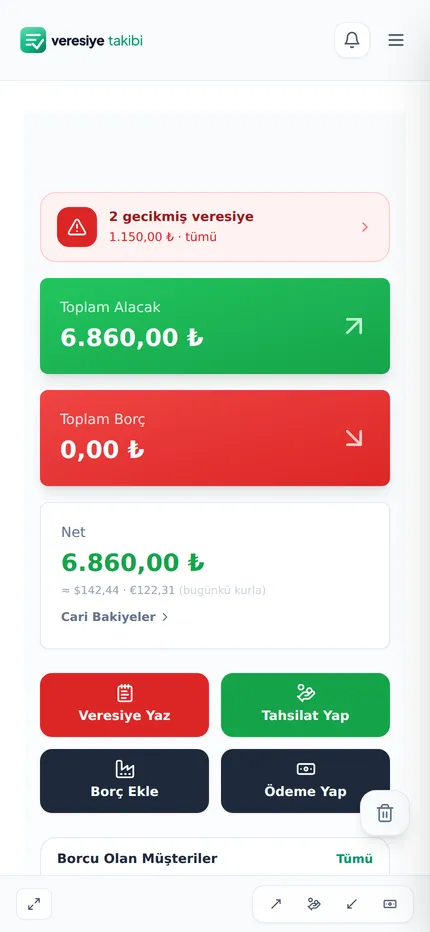
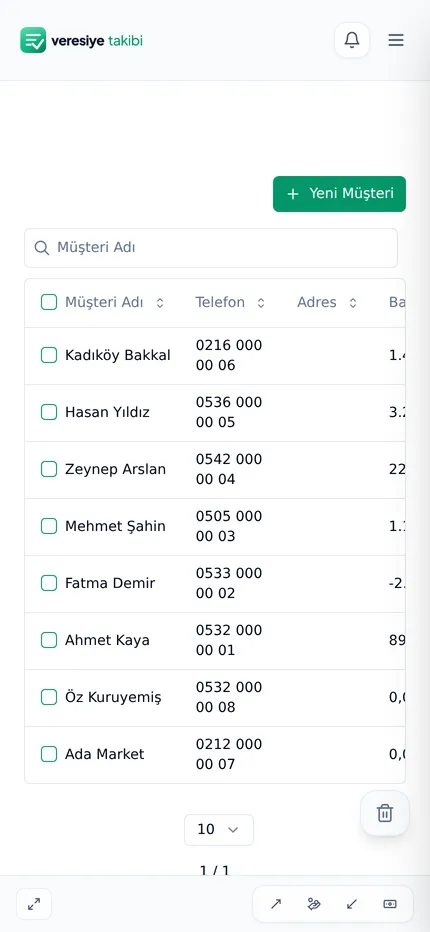
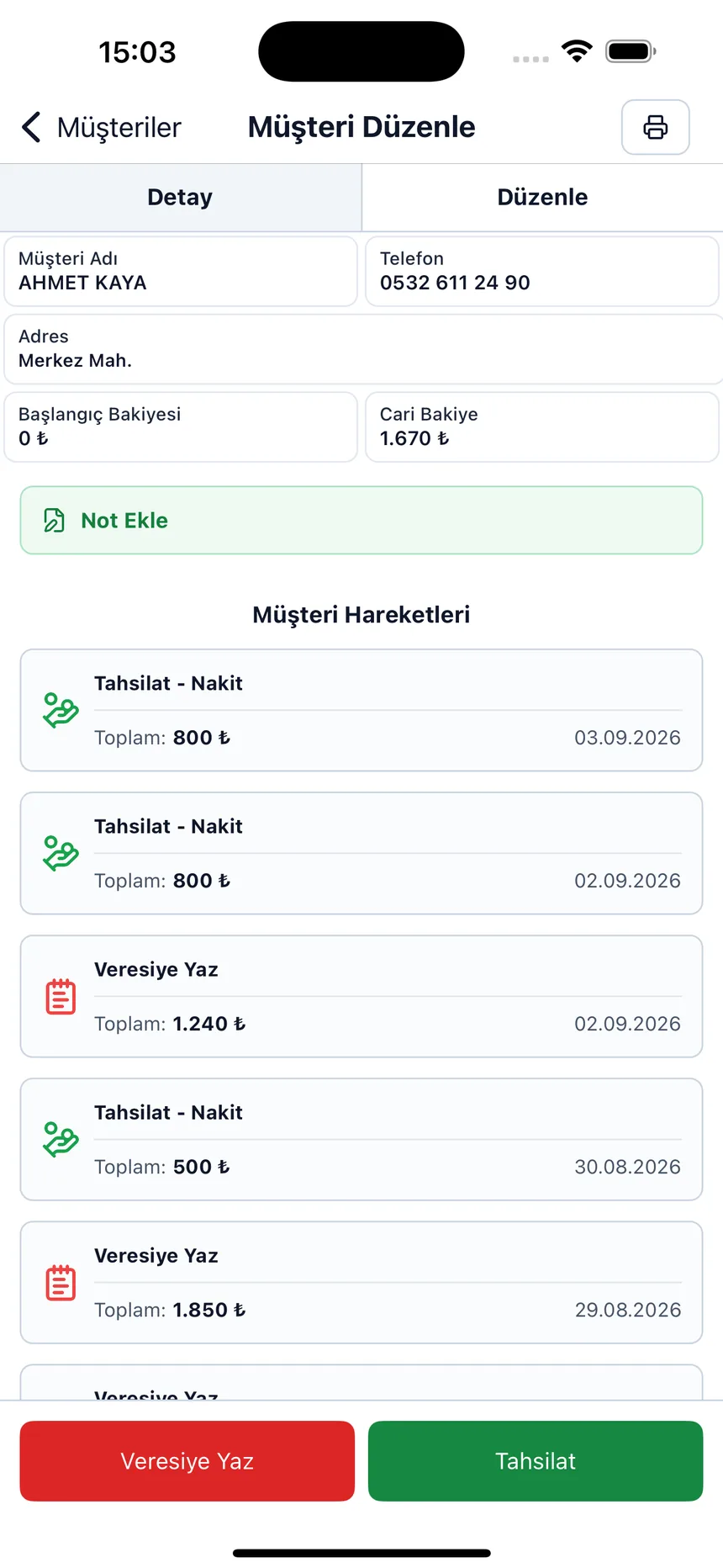
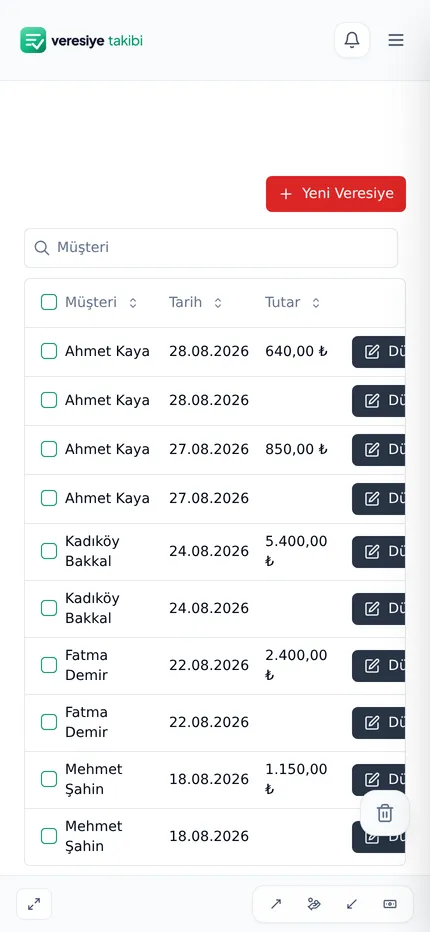
See your open accounts on a single screen
Who owes how much, which account is overdue, how much money is out on the street — it's all ready.