How do you keep a credit ledger?
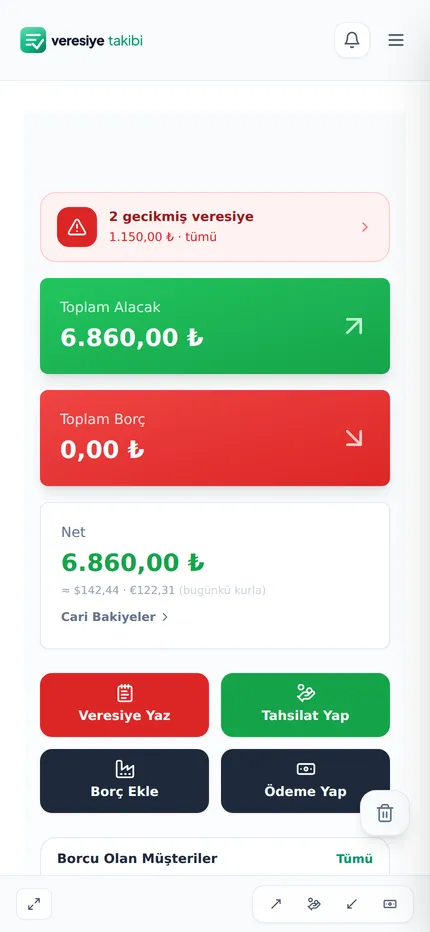
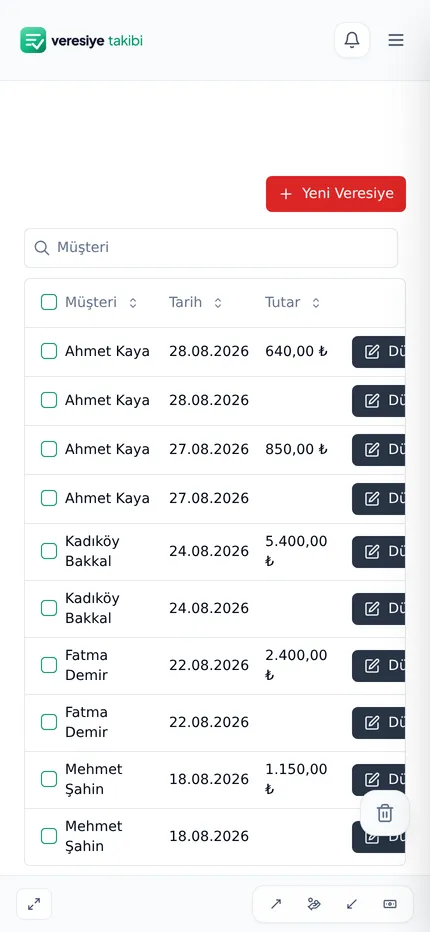
Every record in a credit ledger must have five pieces of information, complete: date, customer name and phone number, item bought, amount and promised payment date. When these five are filled in, collections speed up and disputes end. A paper ledger gets lost and doesn't show totals; a digital ledger gives you your total receivables instantly.
Fill in all five fields
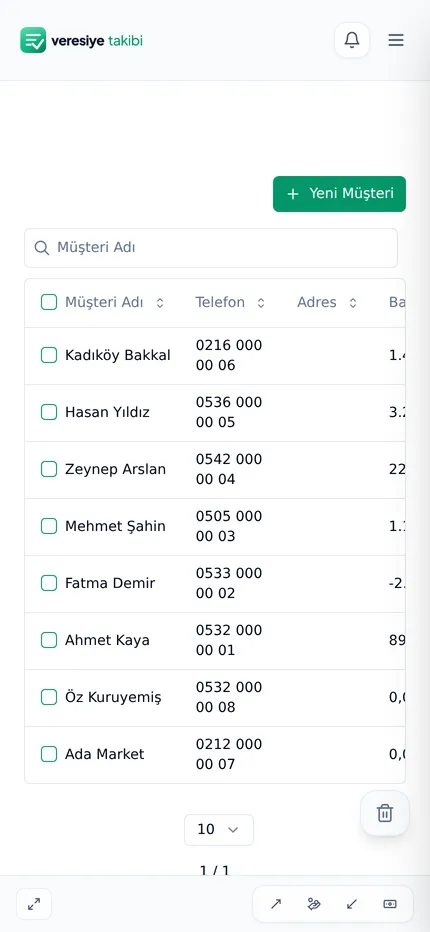
Date: when it was given. Name and phone: so you can send reminders — a record without a phone number is often a record that can't be collected. Item/note: the answer to “what did they buy?” Amount and promised date: the starting point of follow-up.
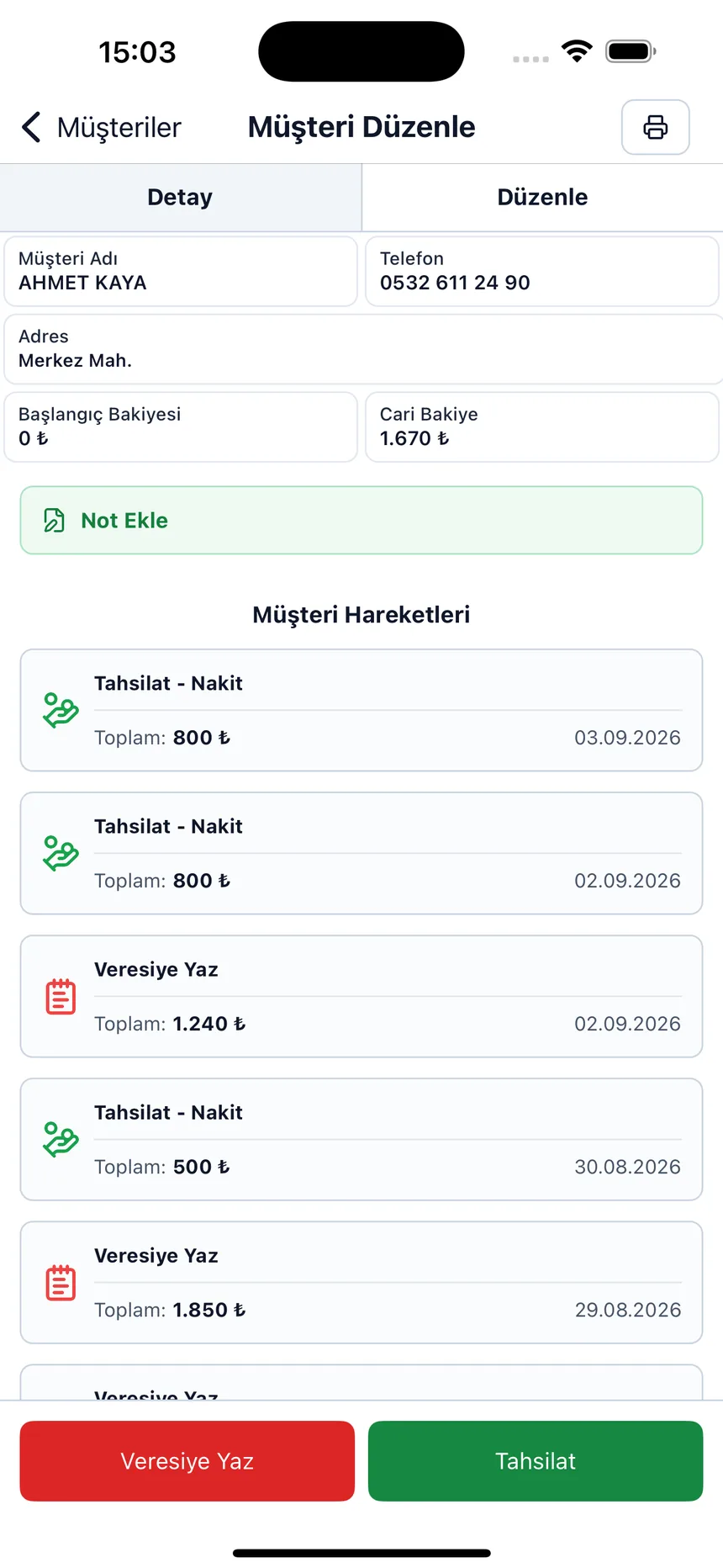
If you want to see these five fields filled in, row by row with the running balance, look at the sample customer page in the credit ledger example page.
Habits that speed up collection
A short reminder one day before the due date noticeably increases the collection rate. Calling within the first three days after the payment date passes is far more effective than waiting two weeks. Accept partial payments and record each payment immediately; as customers see their debt shrinking, they keep paying.
What to do on which day once a payment is late, what to say and sample reminder messages are gathered step by step in the how to collect on credit sales guide.
Set a limit
Set an upper cap for each customer and don't give new credit once it is full. A ledger without limits leaves your working capital out on the street within a few months. Don't give a new customer a high amount on the first go; start with a small amount and see their payment habits.
If you sell to businesses, this cap is called an open account limit; we explain how to set it and what to do when the limit is full, with an example, on the what is an open account page.
Moving from paper to digital
A paper ledger has three problems: it gets lost, it doesn't show totals, it doesn't remind you about lateness. When switching, you don't need to enter old debts one by one — it's enough to enter them once as an opening balance when adding the customer. If you'd like to start with Excel, you can download the free credit ledger template.
The legal side
A credit ledger is a private record in which you track your own receivables; it doesn't replace official books. You still need to document your sales with a receipt or invoice. For large amounts, getting a promissory note or a written acknowledgment of debt strengthens your hand if there is a collection problem.
Frequently asked questions
Should I sell on credit?
For a neighborhood shopkeeper, credit often means customer loyalty. The way to manage the risk is not to refuse; it is to set a limit, keep the record properly and follow the due date.
What can I do about a customer who doesn't pay?
First try a written reminder and an offer of partial payment. If that gets no result and the amount is large, legal support is needed; that is why detailed records matter.
Is it safe to keep the ledger on a phone?
A record kept in the cloud is safer than a paper ledger that can get lost. Use a strong password on your account.
What's described, in the app